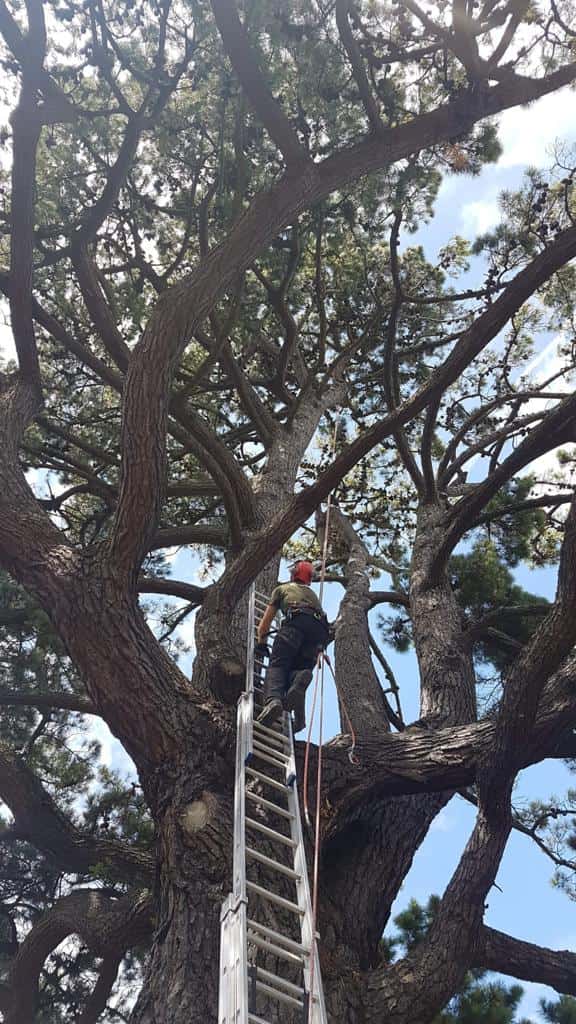
A mature tree can be an important feature of a garden, providing structure, shade, screening and natural character. However, as a tree continues to grow, its size can sometimes become difficult to manage. Branches may extend over buildings or garden areas, the canopy may block increasing amounts of light, or the tree may simply begin to feel out of proportion with the space around it.
For property owners in Cheltenham, Gloucestershire, a large tree does not automatically need to be removed. Depending on its condition, species, structure and surroundings, professional tree surgery may provide ways to manage its size while retaining a healthy and attractive tree.
Does a Large Tree Always Need to Be Felled?
No. Size alone is not usually enough to determine whether tree removal is the most appropriate solution.
A large, healthy tree with good structural form can often remain a valuable part of a garden. The important question is whether its size is creating genuine problems and, if so, whether those problems can be addressed through appropriate tree surgery.
Before considering removal, an arborist can assess the tree’s health, branch structure, canopy, position and relationship with its surroundings. This provides a much stronger basis for deciding whether pruning, crown management or another form of tree surgery is suitable.
Why Trees Can Become Too Large for Their Surroundings
Trees naturally increase in height and spread as they mature. A tree that fitted comfortably into a garden when young can eventually occupy considerably more space.
Problems can develop when:
- Branches extend excessively across the garden
- The canopy becomes too dominant for the available space
- Lower branches restrict access beneath the tree
- Dense growth significantly reduces light
- Branches extend towards buildings or other features
- The tree begins interfering with neighbouring vegetation
- Excessive growth makes routine garden management difficult
These issues do not necessarily indicate that there is anything wrong with the tree itself. They may simply mean that its growth needs professional management.
Crown Reduction Can Manage Overall Size
Crown reduction is one option that may be appropriate for managing an oversized tree.
Rather than removing random branches, crown reduction involves carefully reducing the height and spread of the canopy while maintaining a balanced natural form. Selected branches are shortened back to suitable growth points, helping reduce the overall dimensions of the crown.
When appropriate for the tree, this can make its size better suited to the surrounding garden without removing it completely.
The amount of reduction should always be appropriate to the species, condition and structure of the individual tree. Excessive cutting can negatively affect both appearance and future growth.
Crown Thinning Can Help With a Dense Canopy
Sometimes the problem is not simply the external size of the tree but the density of its canopy.
A very dense crown can restrict light and make the tree feel particularly dominant within the garden. Crown thinning involves selectively removing appropriate branches throughout the canopy while generally retaining its overall height and spread.
This can allow more light to pass through the crown and reduce excessive density without dramatically changing the tree’s natural outline.
Thinning needs to be carefully distributed. Removing too much growth from one section can leave the canopy unbalanced and potentially affect how the remaining branches respond to weather conditions.
Selective Pruning May Be Enough
Not every large tree requires substantial crown work.
In some situations, only particular branches are creating problems. A limb may extend over an important garden area, interfere with access or grow towards another feature.
Selective pruning can address specific branches while leaving most of the canopy unchanged.
This focused approach can be particularly valuable when the tree remains healthy, appropriately positioned and generally suitable for its surroundings. Instead of reducing the entire tree unnecessarily, work can concentrate on the areas genuinely requiring attention.
Removing Lower Branches Can Improve Clearance
A mature tree can sometimes feel too large because low branches restrict how the area beneath it can be used.
Where suitable, careful removal or reduction of selected lower branches can improve clearance and create a more open space beneath the canopy.
This can make pathways, lawns and other garden areas easier to use while retaining the upper structure of the tree.
As with other pruning work, the amount removed should remain proportionate. Tree surgery should improve the relationship between the tree and its surroundings without unnecessarily compromising its natural form.
Reduced Light Does Not Automatically Mean Removal Is Necessary
One of the most common concerns with large garden trees is the amount of shade they create.
As the canopy develops, previously bright sections of a garden can become increasingly shaded. This can affect how the outdoor space feels and may influence the growth of other plants beneath or around the tree.
Depending on the tree, carefully planned crown work may improve light penetration.
The appropriate method depends on whether excessive shade is being caused by overall canopy dimensions, density or particular branches. Assessing the reason first allows tree surgery to be selected accordingly.
Tree Health Should Be Assessed Before Major Pruning
A tree’s condition is an important consideration before deciding how its size should be managed.
Healthy trees may respond differently to pruning from specimens already affected by significant decline, damaged branches or structural weaknesses.
A professional assessment can consider:
- Overall tree vitality
- Dead or declining branches
- Branch unions
- Previous pruning
- Canopy balance
- Visible defects
- The relationship between branch size and structure
- How the tree is likely to respond to proposed work
This helps ensure that the recommended approach considers the tree itself rather than focusing only on reducing its dimensions.
Previous Poor Pruning Can Make a Tree Harder to Manage
The way a tree has been maintained in the past can significantly influence its present structure.
Repeated heavy cutting or poorly positioned pruning cuts can encourage dense regrowth and create an unnatural canopy. In some cases, a tree that appears to have become excessively large may actually contain vigorous growth resulting from earlier inappropriate pruning.
Simply repeating the same approach can continue the cycle.
Professional tree surgery considers previous work and the current branch structure before determining how the canopy should be managed.
Regular Management Can Be Better Than Waiting for Excessive Growth
Trees that are suitable for their location can often benefit from being assessed before their size becomes a significant concern.
Allowing a tree to become substantially larger and then requesting an extreme reduction is not always the best approach. Depending on the species and circumstances, carefully planned management over time may help maintain a more appropriate canopy while avoiding unnecessarily severe pruning.
Regular observation can also reveal changes in branch condition or growth patterns that deserve attention.
The objective should be sustainable tree management rather than repeatedly reacting once the canopy has become problematic.
The Available Garden Space Matters
A tree should always be considered in relation to its surroundings.
A large canopy may be entirely appropriate in a spacious setting but become increasingly difficult to accommodate in a smaller garden. The position of buildings, paths, planting and frequently used outdoor areas can all influence what level of tree growth is practical.
This does not mean every large tree in a restricted space needs removing.
It means that management decisions should reflect how the tree and garden interact. In some cases, carefully reducing or reshaping the canopy can significantly improve that relationship.
When Might Tree Removal Become the Better Option?
Although size alone does not necessarily justify removing a tree, there are situations where felling may become the more appropriate option.
For example, a tree may be fundamentally unsuitable for its position, have significant structural problems or require repeated substantial pruning simply to remain compatible with the available space.
In these circumstances, continually reducing the canopy may not provide a satisfactory long-term solution.
The decision should be based on professional assessment of the complete tree and its surroundings rather than simply concluding that a tall or wide tree must be removed.
Why Excessive Pruning Is Not a Substitute for Proper Tree Surgery
Trying to make a large tree much smaller in one operation can be counterproductive.
Overly severe pruning can remove excessive live growth, disrupt the natural structure of the canopy and encourage vigorous regrowth. The result may be a tree that requires even more attention later.
Good tree surgery aims for proportionate intervention.
The appropriate amount and type of pruning depend on the species, age, health and structure of the tree. Sometimes relatively modest, carefully selected work can make a considerable improvement to how the tree fits within the garden.
Professional Tree Surgery in Cheltenham, Gloucestershire
At EM Tree Surgery Cheltenham, we assess large trees individually before recommending the most appropriate work. Rather than assuming that an oversized tree should be felled, we consider whether professional pruning, crown management or selective branch removal can address the concerns while retaining the tree.
For property owners in Cheltenham, Gloucestershire, this approach can help maintain mature trees while making their size and structure more suitable for the surrounding outdoor space.
Where removal is genuinely the more appropriate option, a professional assessment can also explain why continued pruning may no longer provide a satisfactory long-term approach.
Conclusion
A tree does not necessarily need to be removed simply because it has become large. Many mature trees can continue to contribute positively to a garden when their canopy is managed through suitable professional tree surgery.
Crown reduction, thinning, selective pruning and careful management of individual branches can all be considered depending on the tree and the specific problem. The right solution should take account of the tree’s health, structure, species, position and available growing space rather than focusing on size alone.
If a tree at your property in Cheltenham, Gloucestershire has become difficult to manage, contact EM Tree Surgery Cheltenham. We can assess its condition and recommend an appropriate approach to managing its size while retaining the tree wherever suitable.
Call us on: 01242 569 996
Click here to find out more about EM Tree Surgery Cheltenham
Click here to complete our contact form and see how we can help with your tree needs.