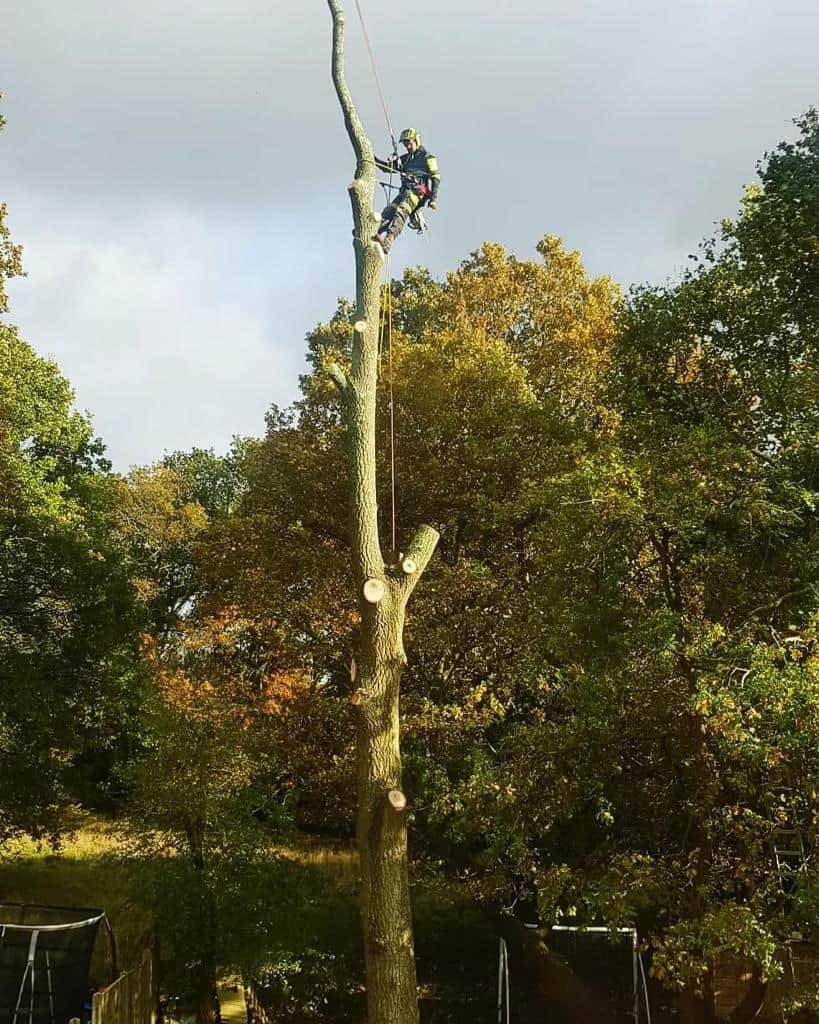
Trees can provide shade, character and valuable greenery around a property, but they require appropriate care to remain healthy and well structured. Tree pruning is one of the most useful forms of routine tree maintenance, involving the selective removal of branches to support the tree’s condition, structure and natural growth.
For homeowners in Cheltenham, Gloucestershire, regular professional pruning can help address dead or damaged branches, manage unwanted growth and maintain a balanced tree. However, pruning needs to be carried out carefully, as removing too much growth or making unsuitable cuts can cause unnecessary stress.
What Is Tree Pruning?
Tree pruning involves selectively removing branches or sections of growth for a specific purpose. Unlike simply cutting a tree back, professional pruning is planned around the tree’s species, condition, structure and surroundings.
Depending on the circumstances, pruning may involve removing deadwood, reducing selected branches, clearing growth from structures or improving the overall structure of the crown.
How Pruning Can Support Tree Health
Dead, damaged or diseased branches can place additional stress on a tree and may create opportunities for decay or other problems. Removing appropriate branches can help concentrate the tree’s resources on healthy growth.
Pruning can also improve the structure of a tree by addressing weak, crossing or rubbing branches. This can reduce unnecessary competition between branches and encourage a more balanced framework.
Removing Dead and Damaged Branches
Dead branches can remain attached to a tree for some time, but they may eventually fall, particularly during windy conditions. Damaged branches can also become weak points within the crown.
Selective removal of deadwood and damaged growth can improve the overall condition of the tree while reducing the likelihood of problematic branches remaining within the canopy.
Encouraging Better Growth
Pruning does not simply involve removing branches; it should have a clear purpose. Carefully selected cuts can help manage the distribution of growth and maintain a more balanced crown.
However, excessive pruning can have the opposite effect. Removing too much foliage at once can place unnecessary stress on the tree and encourage vigorous but poorly positioned regrowth. This is why professional assessment is important when significant pruning is required.
Managing Overgrown Trees
Trees can gradually grow beyond the space available to them. Branches may begin to extend towards buildings, paths, driveways or other structures.
Appropriate pruning can help manage this growth without unnecessarily reducing the tree’s natural shape. The objective should be to remove suitable branches while retaining a healthy and structurally balanced crown.
Improving Tree Structure
A tree with poorly positioned branches can develop structural weaknesses as it grows. Crossing branches, rubbing growth and weakly attached limbs may all require attention.
Professional pruning can address these issues selectively, helping to establish a more balanced structure. Early attention can be particularly useful because small structural problems can become more difficult to manage as branches increase in size.
How Often Should Trees Be Pruned?
There is no single pruning schedule that applies to every tree. The appropriate frequency depends on the species, age, growth rate, condition and location of the tree.
Some trees may require occasional maintenance, while others may need more regular attention because of their surroundings or growth pattern. A professional tree assessment can help establish when pruning is appropriate rather than relying on a fixed schedule.
Signs That a Tree May Need Pruning
Homeowners in Cheltenham may wish to arrange an assessment if they notice:
- Dead or broken branches
- Branches rubbing against one another
- Excessive growth near buildings
- Weak or poorly structured limbs
- Dense or uneven areas within the crown
- Branches interfering with paths or access areas
These signs do not necessarily mean extensive pruning is required. A professional can assess the tree and determine which, if any, branches should be removed.
Why Professional Pruning Matters
Tree pruning requires an understanding of tree structure and how different cuts can affect future growth. Cutting branches in the wrong place or removing excessive amounts of foliage can cause avoidable problems.
EM Tree Surgery Cheltenham can assess the condition and structure of trees before recommending appropriate pruning work. This allows the work to be tailored to the individual tree rather than applying the same approach to every situation.
Professional Tree Pruning in Cheltenham
For homeowners looking after trees around their property, professional pruning can be a practical part of ongoing tree maintenance. EM Tree Surgery Cheltenham provides tree pruning services in Cheltenham, Gloucestershire, with attention to tree health, structure and the surrounding environment.
Whether the requirement involves removing deadwood, managing overgrown branches or improving the structure of a tree, an appropriate assessment can help establish the most suitable approach.
Conclusion
Regular tree pruning can support healthy growth, improve structure and remove branches that are dead, damaged or poorly positioned. However, effective pruning is selective rather than simply cutting away large amounts of growth.
If you have a tree in Cheltenham, Gloucestershire that requires assessment or pruning, contact EM Tree Surgery Cheltenham to arrange a professional inspection and discuss the appropriate tree care for your property.
Call us on: 01242 569 996
Click here to find out more about EM Tree Surgery Cheltenham
Click here to complete our contact form and see how we can help with your tree needs.